
Your AI tools cost more than your rent. Probably.
I expensed every AI subscription on my company card. The total surprised me. The amount I was paying for tools I'd stopped opening surprised me more.
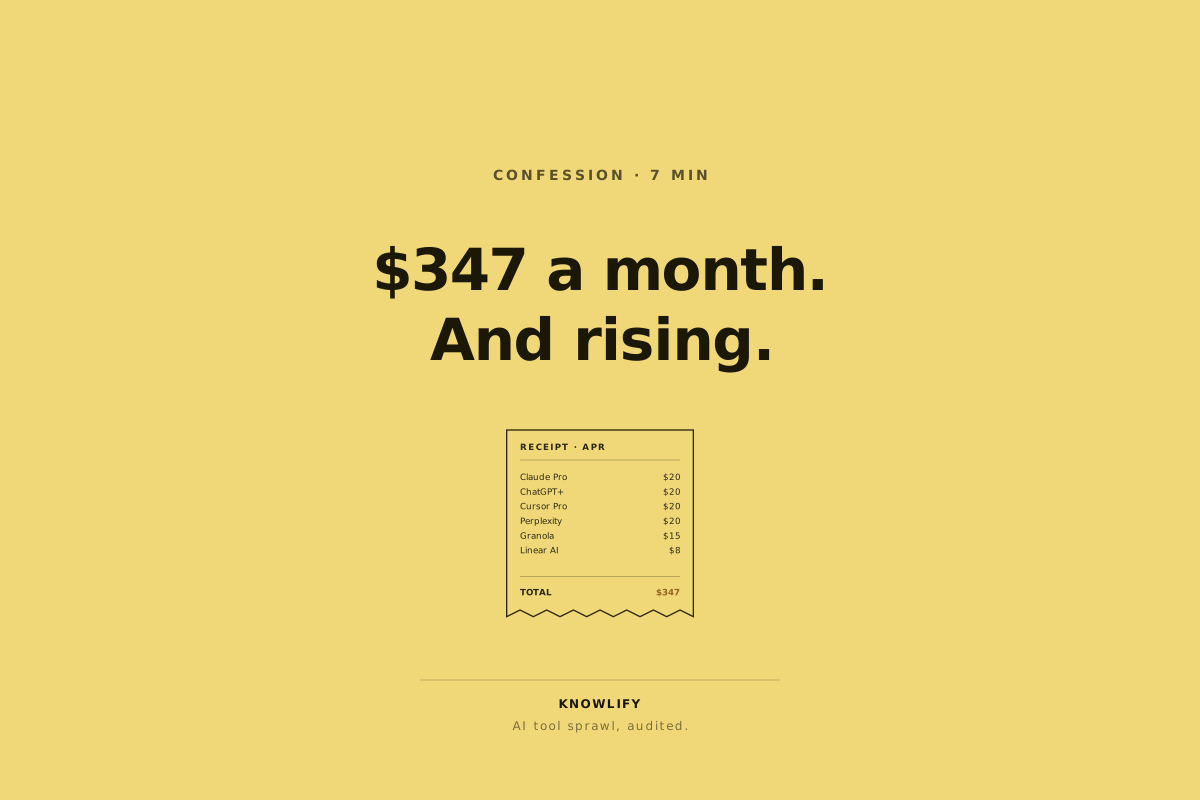
I expensed my AI subscriptions last week. ChatGPT Plus, Claude Pro, Cursor Pro, Perplexity Pro, GitHub Copilot, Linear AI add-on, Notion AI, Granola, Otter, v0, ElevenLabs (for a podcast I haven't recorded in three months), and Midjourney (for a side project I told myself I'd "use weekly"). The total came to $347 a month.
My rent in 2018 was $300. I lived in a fine apartment with a fireplace.
This is not a humblebrag. This is the part of the AI conversation that nobody is having, because everyone in tech can technically afford it and so the cost feels invisible. It's not. It's a slow-motion category creation. And it's nearly as expensive as the last one was, except worse, because the tools rotate faster and the substitution costs are real.
The bill, audited
I sat down for an honest 90 minutes with the credit card statement. Here's what I learned about my $347 a month.
| Tool | Monthly | Last opened | Honest verdict |
|---|---|---|---|
| Claude Pro | $20 | An hour ago | Upgrade to Max. I keep hitting limits. |
| ChatGPT Plus | $20 | Three weeks ago | Cancel. Claude has it covered. |
| Cursor Pro | $20 | An hour ago | Keep. This is the IDE. |
| GitHub Copilot | $10 | Six weeks ago | Cancel. Cursor has it. |
| Perplexity Pro | $20 | Three days ago | Keep, for now. |
| Linear AI add-on | $8 | Daily | Keep. Bundled with the IDE in spirit. |
| Notion AI | $10 | Two months ago | Cancel. I stopped using Notion. |
| Granola | $15 | Yesterday | Keep. Saves me 40 min/day on call notes. |
| Otter | $17 | Six weeks ago | Cancel. Granola replaced it. |
| v0 | $20 | Two months ago | Cancel. I keep meaning to. |
| ElevenLabs | $22 | Three months ago | Cancel. Renew when the podcast restarts. |
| Midjourney | $30 | Five months ago | Cancel. I am not an artist. |
What stood out: I was paying for three tools I'd opened less than four times in the last 30 days. One of them was a tool I genuinely loved when I subscribed eight months ago and then forgot about when a competitor shipped a free tier. The "I might come back to it" tax was about $80 a month, just sitting on the card.
I was also under-investing in the one tool that actually carries my workflow. I was on the cheap tier of Claude when I should have been on Max — and the gap was paying for itself in saved rate-limit context-switches within a week. The expensive thing was actually the cheap thing.
The real problem with AI tool sprawl
It's not the money. The money is annoying but real teams shrug it off.
The real problem is that every tool teaches you a slightly different workflow, and switching costs are non-trivial. Cursor's keybindings are not Windsurf's. Claude's prompt style isn't ChatGPT's. The MCP server you set up for one tool doesn't translate cleanly to the other. If you have eight tools, you have eight workflows, and your brain spends 5% of its calories on which-tool-am-I-in-right-now.
That tax compounds. You don't get good at any of them. You get OK at all of them. And the productivity story you're telling yourself — "I'm using all the latest tools!" — is actually the productivity story you tell yourself about owning ten knife brands but never finishing the dishes.
What I do now
I went on a 30-day diet. I picked the three tools I actually open every day. Claude Max for writing and code work. Cursor for the IDE. Linear's AI because it's inside the tool I already use.
I canceled everything else. I told myself I could re-add anything I missed after two weeks. Two weeks later I re-added one — Granola, because I do take a lot of notes from calls. Nothing else came back.
My monthly AI bill is now $112. My productivity is, by my honest accounting, slightly higher than before — because I stopped context-switching and started actually finishing things in fewer tools.
The deeper trap
The tool industry knows this. They've started bundling, adding features that make their tool the "everywhere tool", offering team plans that hide the per-seat cost in a corporate line item. The same playbook every SaaS category has run. We pretended to learn from SaaS sprawl and then immediately rebuilt it for AI.
The honest move is the boring move. Pick the one or two tools you actually need. Pay for the expensive tier. Let the rest go. The dust will settle in another 18 months. There will be three winners and a long tail of charming failures. You don't need to fund the charming failures yourself.
The cheap rule
Once a quarter, open your card statement. For every AI subscription, ask: when was the last time I opened this.
If the answer is "more than two weeks ago", cancel it. You can always come back. The market is so frothy that any tool worth using will still exist in a month, and probably with a free trial.
If the answer is "every day", look at whether you're on the right tier. The gap between the cheap plan and the expensive plan is almost always worth it for the one tool you live in. Everywhere else, the cheap plan is usually fine.
That's the whole strategy. It saved me $235 a month and about an hour a week of tool-hopping. I bought a slightly nicer dinner with the difference. It tasted better than the dinner where I was paying my tools more than I was paying my landlord.